




Folsom presents a different set of demands than most Sacramento-area communities. The city spans a wide range of elevations and terrain types, from the older grid streets near Historic Folsom down to the sprawling planned developments of Empire Ranch and Broadstone that went up during the building boom of the late 1990s and 2000s. That variety means we service everything from compact older homes with original duct configurations to large two-story new-construction houses where the upstairs consistently struggles to stay cool.
At Airmech Heating and Air Conditioning, our repair work covers the full spectrum of air conditioning issues: refrigerant leaks, capacitor and contactor failures, blower motor problems, frozen evaporator coils, thermostat faults, and drainage backups. We work on all system types and ages, and we bring the same level of care and honesty to every job whether it is a quick fix or a more involved repair.
You will always know what we found and what it costs before we touch anything. That is how we have built relationships with homeowners across Folsom and the broader Sacramento region.
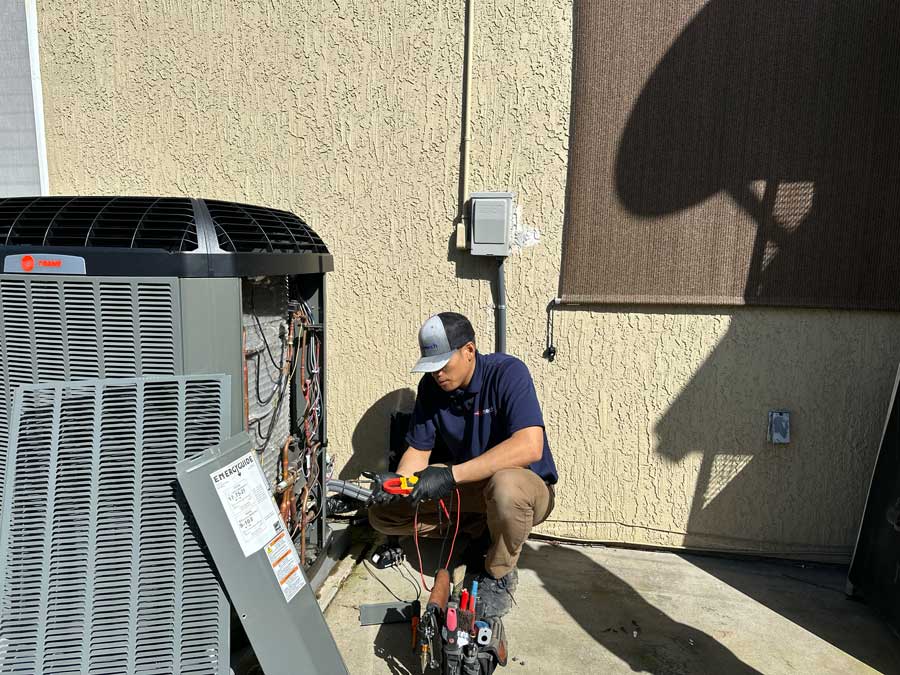
Folsom’s inland location and granite-heavy terrain means the heat builds fast and holds long into the evening. When your system starts showing any of these signs, it is time to call before the problem gets worse.
In Folsom especially, a struggling AC in June or July is not something to monitor and wait on. Once temperatures climb into triple digits, a partial problem can become a complete failure in a matter of days.
Folsom’s geography creates a specific set of stressors for air conditioning equipment that homeowners do not always anticipate. The city sits at a higher elevation than much of the Sacramento Valley floor, and it is surrounded by exposed granite outcroppings and minimal tree cover in many of its newer developments. Radiant heat reflecting off rock, concrete driveways, and tile rooftops keeps ambient temperatures elevated well into the evening, which means outdoor condenser units rarely get a break during the peak cooling months.
Multi-story homes are one of the most common sources of repair calls we get from Folsom. The two-story floor plans that dominate neighborhoods like Willow Creek and Iron Point put a heavy burden on systems that were often undersized at installation or have aged without regular maintenance. Heat stratifies aggressively in these homes, and the equipment runs longer cycles trying to compensate, accelerating wear on compressors, fan motors, and electrical components.
Folsom also sits in a transitional climate zone where late spring and early fall bring temperature swings that cycle systems on and off repeatedly in a single day. That stop-and-start pattern stresses capacitors and contactors more than sustained summer operation does, and it is a pattern we account for when diagnosing intermittent problems that homeowners struggle to reproduce on demand. Hard water from the local supply can also contribute to mineral buildup in condensate drain lines over time, leading to backups that cause water damage if left unaddressed.

On one of the hottest afternoons last July, we got a call from Kevin in the Empire Ranch neighborhood. His two-story home had been cooling fine downstairs all day, but by mid-afternoon the upstairs bedrooms were pushing 85 degrees even with the thermostat set to 74. He had two young kids trying to nap up there and needed answers fast.
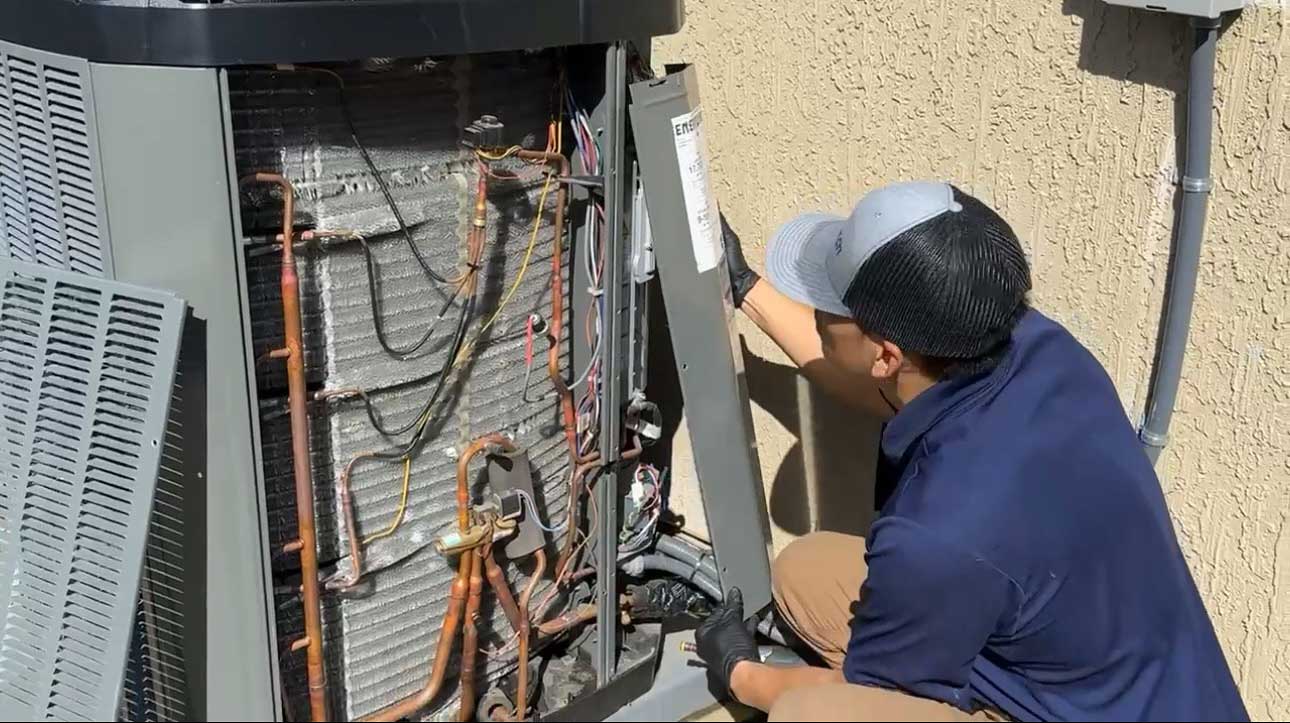
When our technician arrived and pulled the system data, the problem turned out to be a combination of two things working against each other. The evaporator coil was partially iced over due to low refrigerant, which was restricting airflow to the upper floor. And the capacitor on the outdoor unit was reading at the low end of its tolerance range, causing the compressor to start sluggishly under the heat load. Neither issue alone would have caused a full breakdown that day, but together they were enough to make the upstairs unbearable.
We thawed the coil, repaired the refrigerant leak, replaced the capacitor, and had the system running properly before the sun went down. Kevin said the upstairs dropped several degrees within the first hour. It is the kind of call where catching two smaller issues at once saves a homeowner from a much bigger problem down the road.
Folsom homeowners tend to do their research before hiring anyone, and we think that works in our favor. Here is what we bring to every service call.
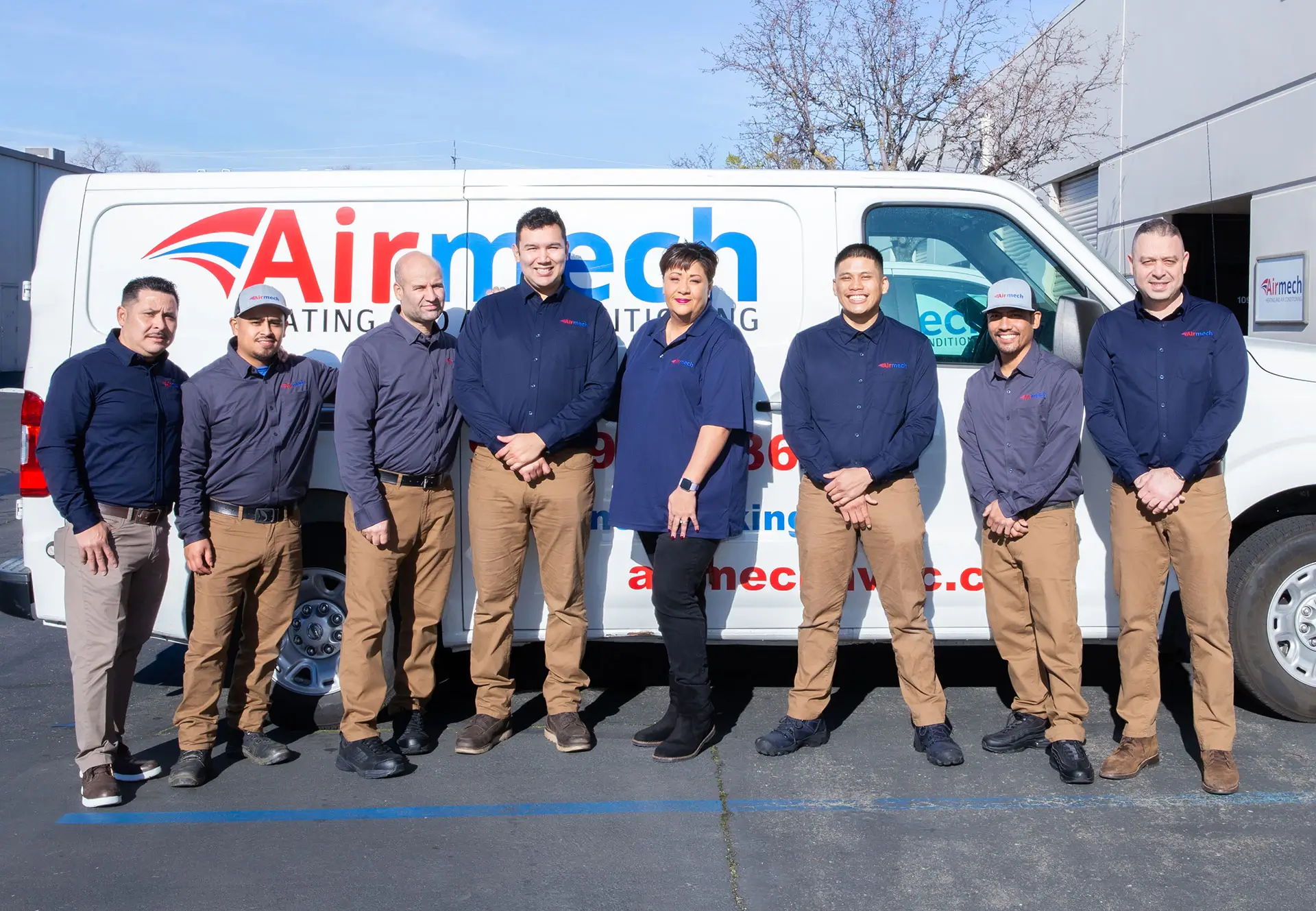
We are not here for a one-time transaction. We want to be the team Folsom homeowners call for the next repair, the next tune-up, and the next system when the time comes.
These are some of the questions we hear most often from Folsom homeowners. If yours is not here, reach out directly or book online anytime through our 24/7 scheduling system.
This is extremely common in Folsom’s two-story homes. Heat rises naturally, and upper floors absorb more radiant heat from rooftops and attic spaces. The cause could be low refrigerant limiting total cooling capacity, duct issues reducing airflow to upper registers, or a system that was undersized for the home from the start. A technician can identify which factor is at play and walk you through the options.
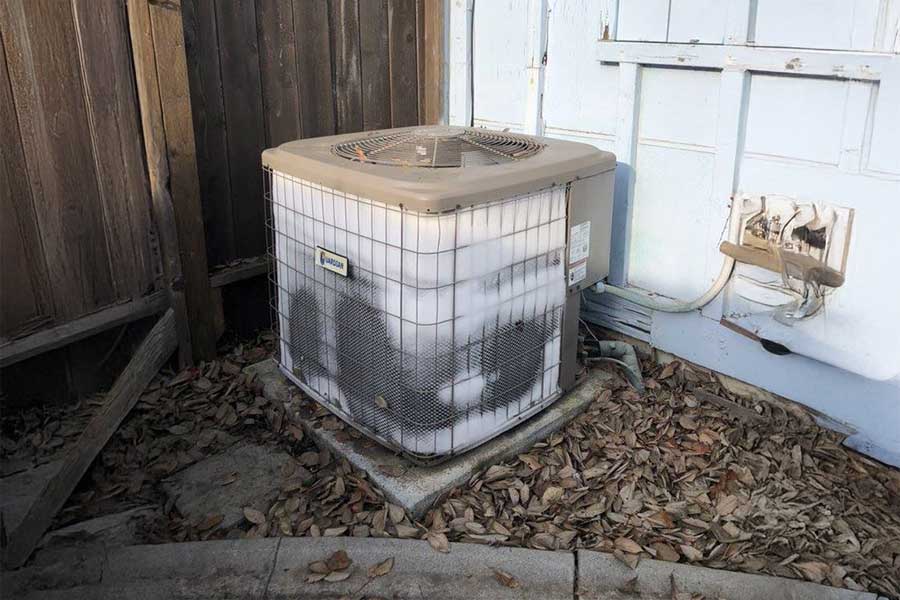
A frozen coil usually shows up as ice on the refrigerant lines near the indoor unit, very weak airflow from vents, or warm air despite the system running. If you suspect it, turn the system to fan-only mode to let it thaw, and call us to find out why it happened. Low refrigerant and restricted airflow are the two most common causes, and both need a technician to fix properly.
Sometimes yes, sometimes no. It depends on what needs to be repaired, how the system has been maintained, and what replacement would cost. We give you a straight comparison rather than defaulting to one answer. If a repair buys you several more good years at a reasonable cost, that is often the smarter call. If the system is on its last legs, we will tell you that too.
Hard water contributes to mineral deposits in condensate drain lines over time, which can cause partial or full blockages. When a drain line backs up, water overflows the drain pan and can damage ceilings, walls, and flooring. Flushing the drain line as part of annual maintenance is a simple step that prevents a costly problem, and it is something we include in every tune-up visit.
Early spring, ideally before April, gives you the best window. You avoid the summer rush, and any issues we find can be repaired before you actually need the system running hard. Folsom’s cooling season starts early and runs long, so getting ahead of it by even a few weeks makes a real difference in how the system performs when the heat arrives.