




Natomas is one of Sacramento’s fastest-growing districts, developed almost entirely from the ground up over the past 25 years on land that was previously agricultural floodplain. The homes here are newer by Sacramento standards, with most of the housing stock built between the late 1990s and the mid-2010s. That relatively tight construction window means systems across the community are now reaching a critical age range, somewhere between 10 and 25 years old, when components begin to fail and deferred maintenance starts showing up as real problems during peak cooling season.
Airmech Heating and Air Conditioning handles the full scope of air conditioning repair for Natomas, CA homeowners. We diagnose and fix refrigerant leaks, failed capacitors and contactors, blower and condenser fan motor failures, frozen evaporator coils, thermostat issues, and condensate drainage problems. We work on all the system types common to Natomas construction and approach every job with clear communication and honest pricing before any work begins.
Whether your system is a mid-2000s unit approaching the end of its useful life or a more recent installation that developed an unexpected issue, we give you a straight assessment and let you decide how to move forward.

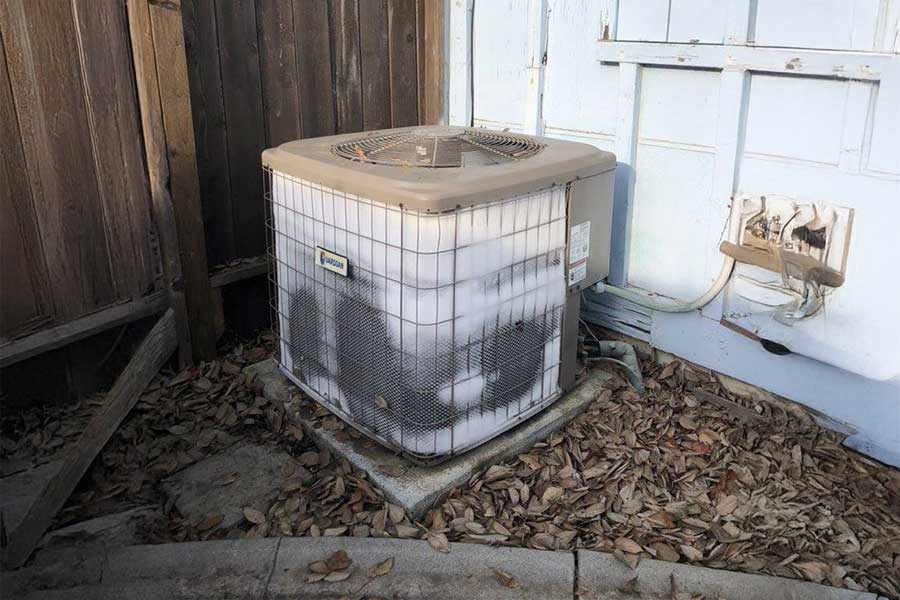
Natomas summers are intense, and the community’s newer construction often gives homeowners a false sense of security about their systems. Age catches up fast when equipment runs hard through multiple triple-digit heat waves without regular servicing. Watch for these warning signs.
Natomas homes are often larger floor plans with open concepts and high ceilings, which means a system that is underperforming has a lot more air volume to struggle against. A small issue that might be manageable in a smaller home can feel like a complete failure in a Natomas floor plan. Getting ahead of it matters more here than in most places.
Natomas was built on reclaimed floodplain, and that origin has lasting consequences for the homes that sit on it today. The water table in parts of Natomas remains relatively high compared to surrounding areas, and that subsurface moisture works its way into crawl spaces, slab foundations, and mechanical rooms in ways that accelerate corrosion on refrigerant line fittings, drain pan hardware, and electrical connections on indoor air handlers. Homeowners who have never thought about groundwater as an HVAC concern are sometimes surprised to find corrosion-related failures on components that should have years of life left in them.
The flat, open character of Natomas also contributes to a wind exposure pattern that is different from more established Sacramento neighborhoods. Delta breezes that push through the Sacramento Valley in late afternoon move across Natomas with very little to slow them down, carrying fine dust and debris from the surrounding open land and the Sacramento River corridor directly into outdoor condenser units. That steady particulate load builds up on coil fins faster than many homeowners expect, especially on units positioned on the windward side of the home.
We also see a pattern in Natomas tied directly to the community’s age profile. Homes built in the early 2000s during the first wave of Natomas development are now sitting with original HVAC equipment that is 20 or more years old. Refrigerant lines, coil connections, and duct seals that were installed during that era have gone through two decades of Sacramento heat cycles without replacement, and they are reaching the point where small leaks and separations are becoming routine rather than exceptional. Annual maintenance has never been more important for this segment of the community than it is right now.

On a Wednesday afternoon in late July, we got a call from Priya, a homeowner in the North Natomas area near the Westshore community. Her system had been struggling for about a week, keeping the house at 78 degrees when it was set to 72, and the indoor humidity felt noticeably heavy despite the AC running constantly. She had a newer home built in 2007 and assumed systems that age should not have serious problems yet.
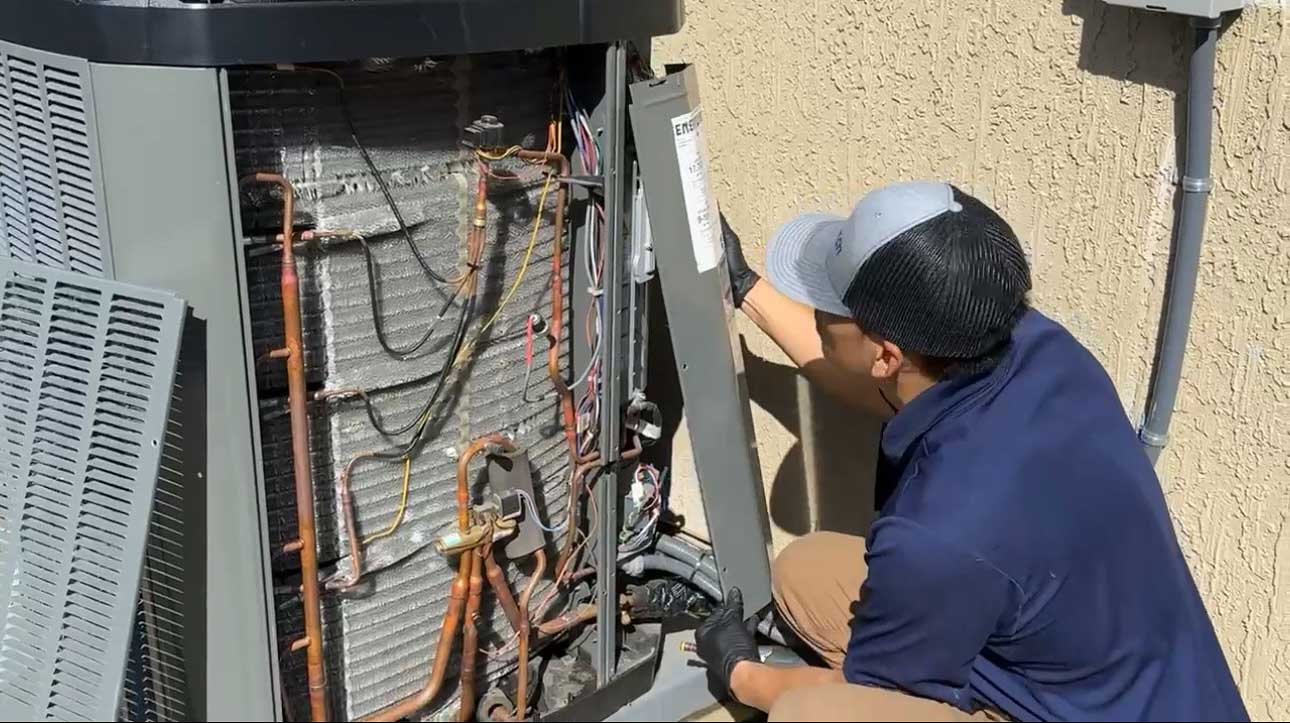
When our technician arrived and pulled the system data, refrigerant pressure was low from a slow leak at the evaporator coil, which explained both the reduced cooling capacity and the elevated indoor humidity. The coil was not pulling moisture out of the air effectively because it was not operating at the correct pressure. On top of that, the condensate drain line had a partial blockage from algae buildup, which is something we see frequently in Natomas given the ambient moisture levels in the area, and the outdoor condenser coil had a season’s worth of fine dust packed into the fins on the windward side of the unit.
We repaired the refrigerant leak, recharged the system, flushed the drain line, and cleaned the condenser coil in a single visit. Priya said the air in the house felt different within the first hour, both cooler and noticeably less humid. She had not realized that indoor humidity was part of what her AC was supposed to be managing. That is a conversation we have often with Natomas homeowners, and it is one of the more satisfying parts of the job.
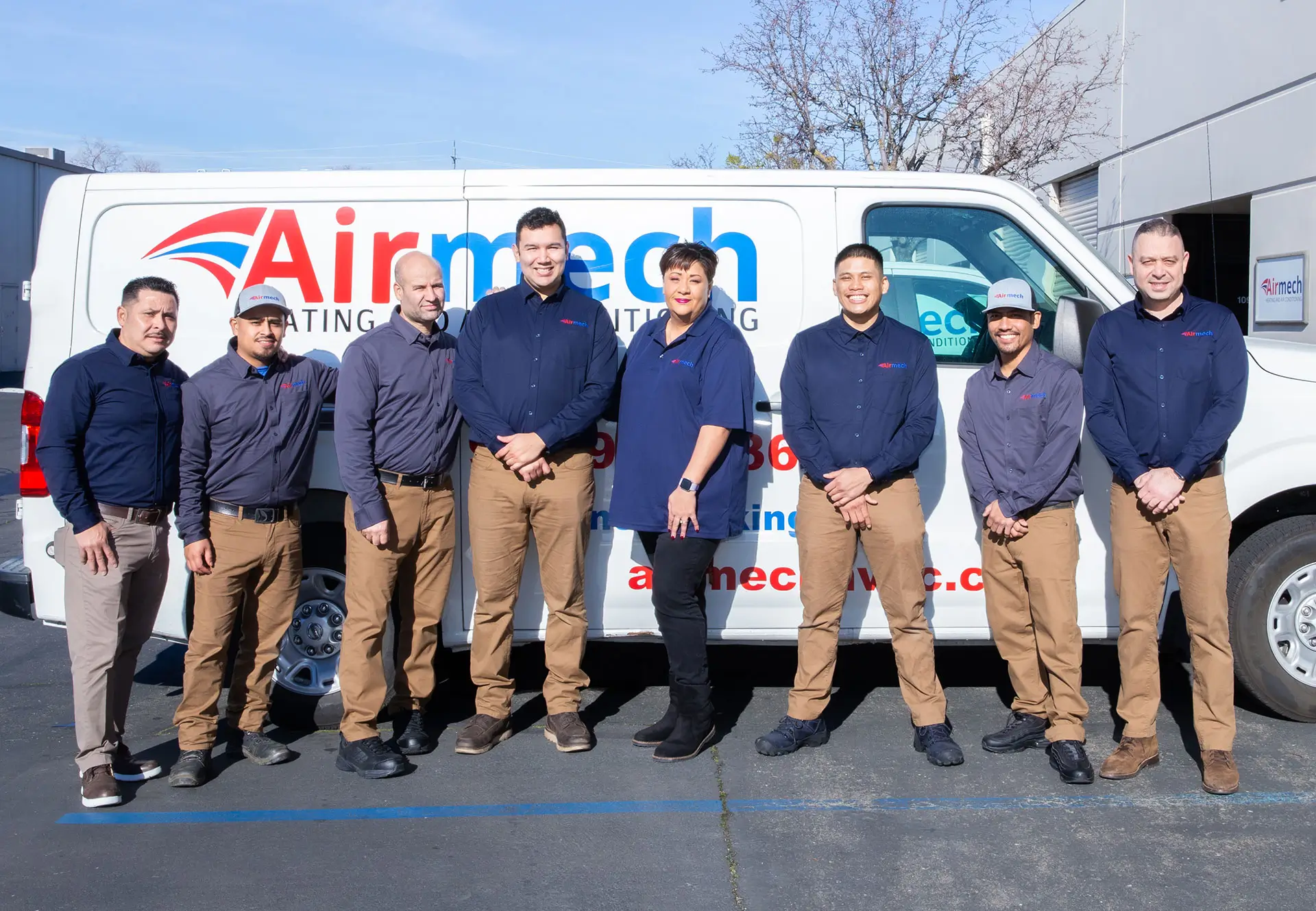
Natomas is a community full of people who did their homework before buying their home and bring that same approach to every service provider they hire. We are glad they do, because we think the comparison works in our favor.
We treat every Natomas home the way we would want our own treated, and we build our reputation one honest service call at a time.
Here are answers to some of the questions we hear most often from Natomas homeowners. Reach out or book online anytime if there is something more specific on your mind.
Yes, and this is something we see play out regularly in Natomas. Systems installed during the early 2000s building boom are now at or past the average service life for many key components. Capacitors, contactors, coil connections, and refrigerant lines all age on their own timeline regardless of how new the house feels. A 20-year-old system that has not been regularly maintained is often one hot summer away from a significant failure.
An AC system that is low on refrigerant loses its ability to remove moisture from the air, even if it is still producing some cooling. Natomas’s relatively high water table and proximity to the Sacramento River contribute to ambient humidity levels that make this problem more noticeable here than in drier parts of the region. If the air in your home feels heavy or clammy despite the system running, low refrigerant or a drainage issue is usually the place to start looking.
The higher water table in parts of Natomas means more ambient moisture in and around the home’s foundation and mechanical spaces. Over time that moisture accelerates corrosion on refrigerant line fittings, drain hardware, and electrical connections inside the air handler. It also contributes to faster algae growth in condensate drain lines. None of this is unmanageable, but it does mean Natomas homeowners benefit from more consistent maintenance attention than homeowners in lower-moisture areas.
Condensate drain lines remove the moisture your AC pulls out of the air. In humid environments like Natomas, that line sees heavy flow and is prone to algae growth that narrows and eventually blocks the line entirely. When it backs up, water overflows the drain pan and can damage ceilings, walls, and flooring before you notice anything is wrong. It is one of the more preventable problems in HVAC maintenance and one of the more costly if it goes undetected.
They can, particularly for units positioned on the side of the home that faces the prevailing breeze direction. Delta winds push fine dust and debris from the open land and river corridor across Natomas with little to break them up, and that particulate accumulates on condenser coil fins steadily throughout the cooling season. Reduced airflow through the coil means the system has to work harder to shed heat, which raises energy use and accelerates component wear. A coil cleaning as part of annual maintenance addresses this directly.