




Sloughhouse is a small rural community in the southeastern corner of Sacramento County, set among rolling oak-studded foothills and open rangeland along the Cosumnes River corridor. Homes here are spread across large parcels, and most of the residential development reflects the character of the area: custom builds, older farmhouses, manufactured homes, and ranch-style properties that were never part of any master plan. HVAC systems on these properties tend to reflect that same variety, and they often go longer between service visits than systems in suburban communities where HVAC companies market more aggressively.
At Airmech Heating and Air Conditioning, we handle the full range of air conditioning repair for Sloughhouse, CA homeowners regardless of what the property looks like or how old the equipment is. That includes refrigerant leaks, capacitor and contactor failures, blower and condenser fan motor problems, frozen evaporator coils, thermostat malfunctions, ductwork issues, and condensate drainage failures. We are comfortable on rural properties with non-standard setups and give every homeowner the same honest assessment and clear pricing before any work starts.
Distance from the city does not mean you should expect less from your service provider. It means you should expect someone who shows up prepared and gets things done right the first time.
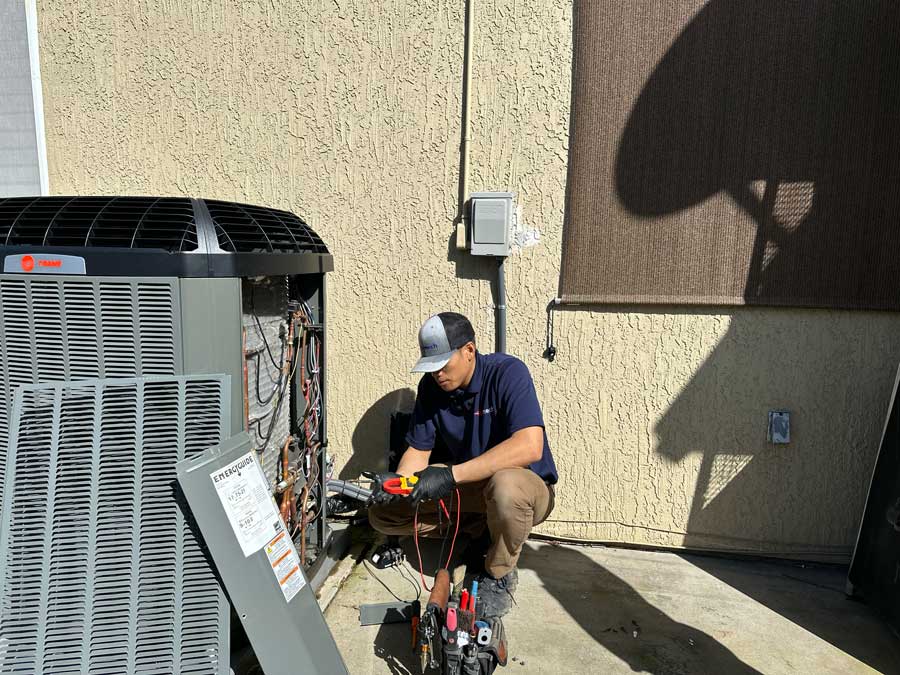
Sloughhouse sits in a part of Sacramento County where summer heat arrives early, stays intense, and offers very little shade relief once it settles in over the open valley and foothill terrain. These signs mean it is time to make a call.
On a rural property in Sloughhouse, a failed AC system is not just a discomfort issue. When the nearest parts supplier or service company is a significant drive away, catching problems early matters even more than it does closer to town. A small issue addressed in May is almost always a fraction of what the same issue costs to fix after a full breakdown in August.
Sloughhouse sits at the transition zone between the flat Sacramento Valley floor and the lower Sierra Nevada foothills, and that geography creates a specific set of conditions that work against air conditioning equipment in ways that suburban homeowners rarely encounter. Summer afternoons here bring hot, dry air moving off the foothill terrain with very little humidity to moderate it, and that combination of high temperature and low relative humidity accelerates the drying and cracking of rubber and polymer components inside HVAC systems. Duct boot seals, flex duct connections, and drain line gaskets all degrade faster in this environment than they do in more temperate or shaded settings.
The open rangeland and seasonal grassland surrounding Sloughhouse generates a distinctive kind of airborne particulate load. Dried grass seed heads, fine dust from unpaved roads and dry creek beds, and pollen from native oak and foothill vegetation all move through the air in significant concentrations during the summer months. Outdoor condenser units on properties without windbreaks or landscaping barriers accumulate this material on coil fins at a rate that can meaningfully restrict airflow within a single season, particularly on units that face the prevailing wind direction off the open land.
We also encounter a pattern in Sloughhouse that is specific to properties served by well water rather than municipal supply. When condensate drain lines develop mineral scale from well water chemistry, the buildup progresses differently than algae-based blockages in municipal water areas, tending to form harder deposits that are more resistant to simple flushing and require a more thorough cleaning approach. Homeowners on well water in this area often go several seasons before a drain backup makes itself known, by which point water damage to surrounding materials has sometimes already begun.

Earlier this summer, we got a call from Frank, a homeowner on a rural property off Latrobe Road near Sloughhouse. His system had been running constantly through a stretch of 105-degree days but the interior of his home was not getting below 82 degrees no matter what the thermostat was set to. The system was about 16 years old and had not been serviced in at least five years, possibly longer.
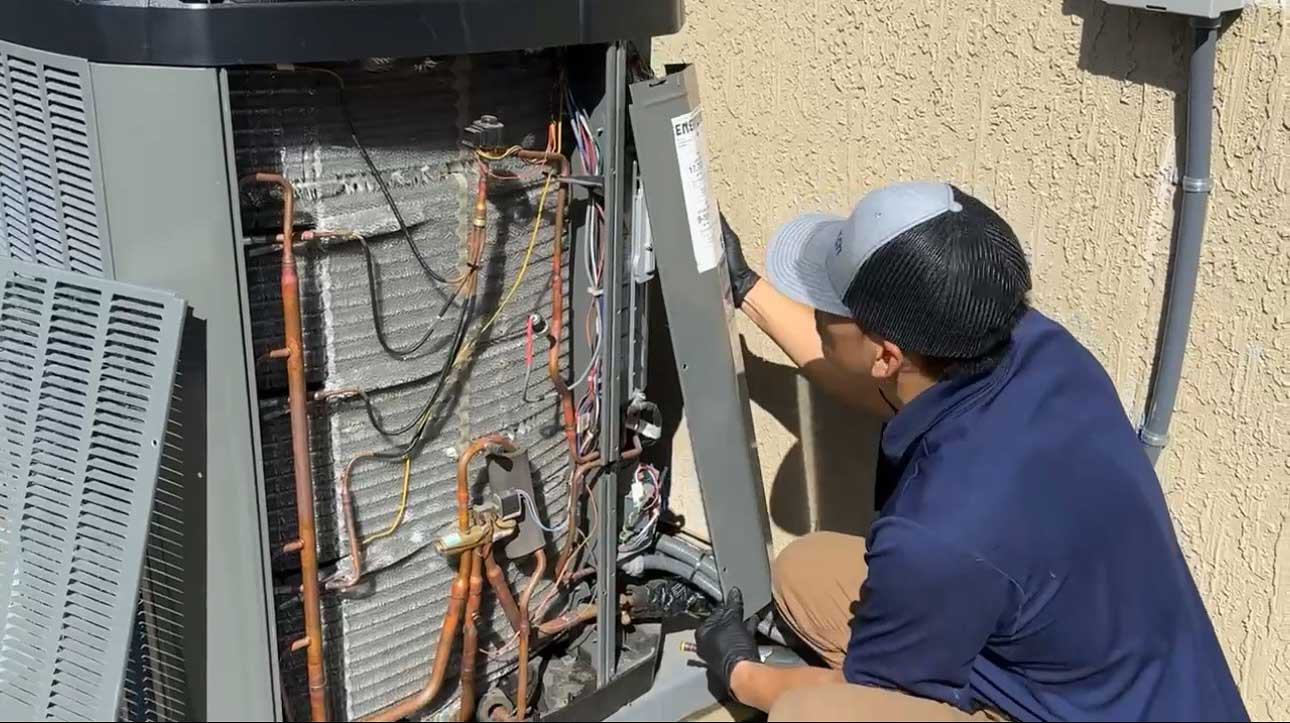
When our technician arrived and assessed the outdoor unit, the condenser coil was packed with dried grass material and fine foothill dust that had accumulated over multiple seasons without a cleaning. Airflow through the coil was severely restricted, and refrigerant pressure was low from a slow leak at a fitting on the line set running along the side of the house, a connection that had dried and weakened over years of exposure to the hot, low-humidity air common to this part of the county. Inside, the condensate drain line had a hard mineral deposit partially blocking the outlet, consistent with the property’s well water chemistry.
We cleared the condenser coil, repaired and recharged the refrigerant, and cleared the drain line deposit in a single visit. Frank said he had been putting the call off partly because he assumed getting someone out to a rural property would be a hassle and partly because he figured the whole system was probably done for. Neither turned out to be true. The system was cooling properly before we left the property, and Frank said it was the best it had run in years.
Rural homeowners in Sloughhouse do not have time for service companies that do not show up prepared or do not level with them about what they find. That is not how we operate.
We make the drive because we want to be the team Sloughhouse homeowners call back the next time something comes up, and we know that only happens when we earn it on this visit.


Here are answers to some of the questions we hear most often from Sloughhouse homeowners. If yours is not here, reach out directly or book online any time through our 24/7 scheduling system.
Yes. We serve homeowners across Sacramento County including rural communities like Sloughhouse. Distance is not a reason to accept unreliable service, and we come prepared to handle the kinds of non-standard setups common on larger rural properties. When you schedule online or call us, just let us know the property location and we will confirm availability and timing upfront.
It can, specifically when it comes to condensate drain lines. Well water chemistry in this part of Sacramento County tends to leave mineral deposits that build up differently than the algae-based blockages more common in municipal water areas. These deposits are harder and less responsive to simple flushing, so they require a more thorough cleaning approach when we find them. Letting us know you are on well water helps us come prepared with the right tools for the job.
The transition zone between the valley floor and the lower foothills around Sloughhouse produces hotter, drier air than more urbanized parts of the county, with less humidity to moderate the heat load. That combination is harder on AC equipment than the conditions closer to the city, particularly for rubber and polymer components that dry and crack faster in low-humidity heat. Systems in this environment benefit from more frequent inspection of seals, gaskets, and duct connections than equivalent systems in milder settings.
Extended exposure to hot, dry air accelerates the aging of rubber seals at duct boots, flex duct jacket material, and drain line gaskets. These components rely on maintaining some elasticity to hold a seal, and in low-humidity environments they dry out and become brittle faster than manufacturer ratings based on average conditions would predict. A technician checking these components during a service visit can catch early-stage deterioration before it becomes a significant air leak or drainage failure.
At minimum once a year in early spring, before the cooling season starts. Given the volume of foothill dust, dried grass material, and oak pollen that moves through the air around Sloughhouse during the summer months, properties without natural windbreaks or vegetation buffers around the outdoor unit may benefit from a mid-season condenser check as well. We can advise on the right frequency for your specific property during a service visit.